Hawaii’s Food Scene Exposed: What Tourists Always Get Wrong
You’ve seen the postcard sunsets, but have you tasted the real Hawaii? I didn’t either—until I learned the hard way. Tourists flock to flashy luau feasts and poke bowls from gas stations, missing the soul of Hawaiian food culture. It’s not just about coconut shrimp and spam musubi. True flavors live in local kitchens, roadside stands, and family-run markets. This is a journey beyond the tourist traps—where authenticity beats convenience, and respect shapes the plate. Hawaiian cuisine is a living tradition, shaped by generations of islanders who honor the land and sea. To truly taste it, one must look past polished menus and Instagrammable platters and seek the quiet places where food is still made with care, history, and humility.
The Illusion of “Local Food” in Tourist Zones
In the heart of Waikiki, neon signs promise “authentic Hawaiian cuisine” with every step. Restaurants boast names like “Tiki Luau Grill” or “Island Breeze Café,” serving platters of kalua pork, mac salad, and teriyaki chicken to crowds of sun-kissed travelers. The menus are colorful, the service quick, and the portions generous. Yet, for all their charm, these eateries often deliver a version of Hawaiian food that is more fantasy than fact. The kalua pork, traditionally slow-roasted in an imu (an underground oven), arrives steaming from a steam table, its smoky depth replaced by artificial hickory flavoring. The mac salad is mayonnaise-heavy and chilled to a gelid consistency, lacking the subtle tang of homemade preparation. Even the rice—meant to be fluffy and warm—often sits for hours, losing its texture and soul.
What tourists may not realize is that many of these dishes are designed for mass appeal, not cultural accuracy. The goal is not preservation but profit. Ingredients are sourced for cost-efficiency rather than quality, and recipes are adjusted to suit mainland palates—sweeter, saltier, richer. A dish like laulau, which traditionally wraps pork, fish, or chicken in taro and ti leaves and steams for hours, may be replaced with a simplified version using foil and pre-cooked meat. The result is a meal that looks Hawaiian but tastes generic, a culinary caricature served under the guise of authenticity. Terms like “native-style” or “island-inspired” are used freely, but they carry little weight when the food lacks connection to actual Hawaiian cooking methods.
The cost of this illusion is more than financial—it’s cultural. Travelers pay premium prices for meals that offer only a shallow glimpse into Hawaii’s rich food heritage. Meanwhile, local chefs and home cooks who prepare traditional dishes with care receive less attention and support. The message sent is clear: spectacle sells, substance does not. This commercialization risks turning Hawaiian cuisine into a theme park version of itself, where flavor is secondary to photo opportunities. To avoid this trap, visitors must learn to distinguish between food made for tourists and food made by locals. The difference lies not in presentation but in intention.
Poke Gone Wrong: When Trend Kills Tradition
Poke, pronounced “poh-kay,” was once a humble fisherman’s meal—chunks of fresh ahi tuna tossed with sea salt, limu (seaweed), and inamona (crushed roasted nuts). Simple, clean, and deeply rooted in Hawaiian coastal life, it reflected a relationship with the ocean that was both practical and reverent. Today, poke has become a global phenomenon, with chains popping up in cities from New York to Berlin, offering rainbow-colored bowls topped with sriracha aioli, crispy onions, and mango salsa. While this evolution speaks to the dish’s popularity, it also signals a departure from its origins.
The problem lies not in innovation but in erasure. Many commercial versions of poke prioritize visual appeal over flavor integrity. The fish may be frozen, not fresh, and cut into uniform cubes more suited to assembly lines than hand preparation. Sauces dominate—creamy dressings mask the natural taste of the fish, while sugary marinades overpower the delicate balance of salt and umami. In some cases, the tuna is so heavily dressed it resembles a cold salad more than a celebration of the sea. Even convenience stores on Oahu now sell pre-packaged poke, often sitting under fluorescent lights for hours, their freshness questionable at best.
Yet, just a few miles from the tourist hubs, the true spirit of poke lives on. At neighborhood fish markets like Tamashiro Market in Kalihi or Kaimuki Fish Market, locals line up early for hand-cut ahi prepared the traditional way. The counters are modest, the signage handwritten, and the process unhurried. Here, poke is not a trend—it’s a tradition. Customers might choose from classic ahi, octopus, or even tako (squid), each seasoned with minimal ingredients that enhance rather than conceal. These markets often source directly from local fishermen, ensuring sustainability and supporting the island’s fishing communities. For the traveler willing to venture beyond the resort zones, these spots offer not just better food but a deeper understanding of how Hawaiians relate to their environment.
The Spam Myth: Not All Musubi Is Created Equal
Spam musubi, a slice of grilled Spam atop a block of rice, wrapped in nori, has become one of Hawaii’s most iconic snacks. Found in lunchboxes, convenience stores, and plate lunch counters, it’s a symbol of the islands’ unique blend of cultures—American processed meat meeting Japanese culinary form. But while its popularity is undeniable, the quality varies dramatically. Too often, tourists encounter musubi made with low-grade Spam, stale rice, and flimsy nori that falls apart with the first bite. The result is a greasy, overly salty mouthful that does little justice to the dish’s potential.
What makes a great musubi is balance. The rice should be warm, slightly vinegared, and firm enough to hold its shape without being hard. The Spam must be seared just right—crispy on the outside, tender within—and glazed with a light coat of teriyaki sauce that enhances, not drowns, the flavor. The nori should be crisp, not soggy, and wrapped tightly to keep the layers intact. When these elements come together, the musubi becomes more than a snack—it becomes a small masterpiece of texture and taste. This level of care is rarely found in mass-produced versions, where speed and cost-cutting take precedence over craftsmanship.
For those seeking the real thing, the best musubi is often found in unassuming places: family-run plate lunch spots, school fundraisers, or church bazaars. At Liliha Bakery on Oahu, the musubi is made fresh daily, with attention to every detail. At roadside stands during local festivals, vendors prepare them in batches, grilling the Spam to order. These are not commercial products but expressions of aloha, made with pride and shared with community in mind. By choosing such places, travelers support local livelihoods and experience a side of Hawaii that cannot be replicated in a chain store.
Luau Culture vs. Luau Commodity: A Feast Divided
The luau is one of Hawaii’s most celebrated traditions—a feast that brings people together in gratitude, music, and shared abundance. Historically, luaus were held to mark important events: births, weddings, victories, or the arrival of honored guests. Food was prepared in imu pits, with pork, fish, and vegetables slow-cooked for hours beneath layers of hot rocks and earth. The atmosphere was communal, joyful, and deeply meaningful. Today, however, the luau has been transformed in many places into a nightly entertainment package for tourists, complete with fire dancers, hula performances, and endless buffets. While these events can be enjoyable, they often lack the soul of the original tradition.
Hotel-based luaus frequently rely on reheated dishes, canned music, and scripted performances. The food, while plentiful, is often mass-produced in central kitchens and transported to the site. The kalua pork, meant to be smoky and tender from underground roasting, may instead be steamed or baked, losing its distinctive character. The poi, a staple made from taro root, is sometimes served too thick or too sour, indicating poor preparation. Portions are large, but the experience is impersonal—guests eat with plastic forks under floodlights, more observer than participant.
In contrast, a family-style island luau is an entirely different experience. Held in backyards, community centers, or beach parks, these gatherings feature food cooked on-site, often in traditional imu pits. The menu reflects the host’s heritage—perhaps laulau, pipikaula (dried beef), and haupia (coconut pudding)—and is served with pride. Guests are encouraged to mingle, share stories, and even help with preparation. The music is live, the hula heartfelt, and the sense of connection palpable. For travelers, the challenge is finding such events without intruding. The key is building relationships—talking to local guides, staying in bed-and-breakfasts, or joining cultural tours led by Native Hawaiians. These avenues offer respectful access to authentic experiences, where participation is welcomed, not staged.
Hidden Kitchens: Finding Real Flavors Off the Beaten Path
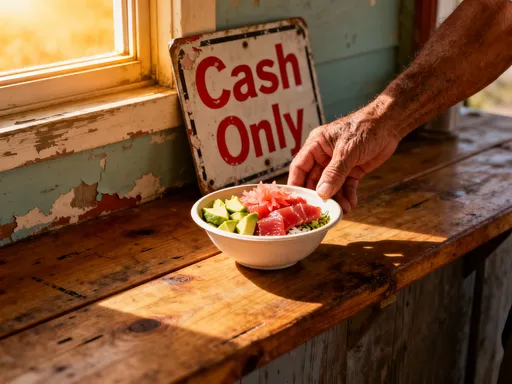
The most authentic Hawaiian food is rarely found in places with websites or online reviews. Instead, it thrives in the quiet corners of the islands—behind unmarked doors, in parking lots of strip malls, or at roadside stands with hand-painted signs. These are the hidden kitchens where locals eat, where recipes are passed down through generations, and where money changes hands in cash, not cards. They operate on trust, reputation, and word of mouth. To find them, one must be willing to wander, to ask questions, and to embrace a little uncertainty.
Plate lunch spots, a staple of local dining, offer hearty meals of meat, rice, and mac salad, often for under ten dollars. Places like Rainbow Drive-In in Honolulu or L&L Hawaiian Barbecue (before its expansion into a chain) built their reputations on consistency and flavor. Food trucks, especially those near industrial areas or near military bases, serve up fusion dishes that reflect Hawaii’s multicultural makeup—Korean-style short ribs, Filipino adobo, Portuguese sausage. Church fundraisers, held on weekends, offer kalbi ribs, butter mochi, and other favorites, with proceeds going to community causes. These are not just places to eat—they are social hubs, where neighbors gather and traditions are kept alive.
What makes these spots special is their diversity. Hawaiian cuisine is not monolithic; it is a mosaic shaped by waves of migration. Chinese, Japanese, Filipino, Korean, Portuguese, and Puerto Rican influences have all left their mark, creating a culinary landscape that is rich and dynamic. A single meal might include loco moco (a hamburger patty over rice with a fried egg and gravy, of Japanese-American origin), saimin (a noodle soup with Chinese and Japanese roots), and haupia—all on one plate. This blending is not accidental but intentional, a reflection of Hawaii’s spirit of inclusivity. For the traveler, exploring these flavors is a way of honoring that history, of tasting the islands’ true identity.
The Etiquette of Eating Like a Local
Eating in Hawaii is not just about what you eat, but how you eat. Locals value patience, humility, and respect at the table. Rushing through a meal, demanding immediate service, or complaining about wait times sends the wrong signal. In many family-run eateries, food is made to order, and the kitchen moves at its own pace. This is not inefficiency—it is care. A dish that takes time is often one that has been prepared with attention to detail, using fresh ingredients and traditional methods. To demand speed is to misunderstand the culture.
Ordering customs also differ from mainland norms. At plate lunch counters, customers often point to items in display cases or call out their choices to the server. Menus may be minimal, and substitutions rare. This is not unfriendliness—it is efficiency. Servers appreciate clear, polite orders and return the courtesy with warmth and speed. Tipping is customary, especially in sit-down restaurants, but even at takeout windows, a small tip is a sign of appreciation. The unspoken rule among locals is simple: “When in doubt, ask the person next to you.” A fellow diner is often the best guide to what’s good, how it’s usually ordered, or which sauce to try.
Curiosity, when expressed with humility, opens doors. Asking a vendor how a dish is made, or complimenting a cook on their technique, can lead to conversations, recommendations, or even invitations to future events. But curiosity must not become entitlement. No one is obligated to share family recipes or cultural knowledge. Respect means listening more than speaking, observing before acting, and accepting “no” with grace. When travelers approach food with this mindset, they are not just consumers—they become guests, welcomed into a culture that values connection over convenience.
Eating with Purpose: Supporting Sustainable and Cultural Preservation
Every meal in Hawaii is a choice—one that affects the environment, the economy, and the survival of cultural traditions. Choosing to eat at a local plate lunch spot instead of a chain restaurant supports small businesses and keeps money within the community. Opting for fresh, locally caught fish reduces reliance on imported seafood and helps sustain responsible fishing practices. Avoiding single-use plastics and disposable containers minimizes waste, a critical concern on islands with limited landfill space. These decisions, while small, add up to meaningful impact.
The environmental cost of food over-tourism is real. Increased demand leads to overfishing, excessive packaging, and higher carbon emissions from imported goods. Popular dishes like ahi tuna, when sourced irresponsibly, can deplete fish populations and harm marine ecosystems. By contrast, farm-to-table initiatives and community-supported agriculture are gaining momentum across the islands. Farmers’ markets, such as the KCC Farmers Market in Honolulu, connect consumers directly with growers, offering fresh produce, handmade goods, and cultural education. These spaces are not just about food—they are about relationships, transparency, and stewardship.
For travelers, eating with purpose means seeing food as more than fuel. It is a way to honor the land (‘āina) and the people who care for it. It means choosing quality over quantity, connection over convenience, and respect over entitlement. When visitors support local vendors, they contribute to the preservation of Hawaiian foodways, ensuring that future generations can taste the same flavors, share the same stories, and gather around the same tables. In this way, every bite becomes an act of aloha—a gesture of love, respect, and reciprocity.
Hawaiian cuisine is more than a meal—it’s a story of land, ocean, and generations. Avoiding the traps isn’t about perfection; it’s about intention. By stepping off the well-worn path and listening before eating, travelers don’t just taste better food—they become part of a culture’s continuity. Let your palate lead with respect, and Hawaii will feed your soul in ways you never imagined.