You’ve Never Tasted Como Like This: Hidden Bites Beyond the Tourist Trail
Most visitors to Lake Como stick to the lakeside piazzas and fancy waterfront ristoranti, but the real flavors hide in plain sight. I ventured into quiet hillside villages, family-run trattorias, and local markets where menus aren’t in English and recipes are passed down like heirlooms. This isn’t just dining—it’s a slow, savory dive into Lombard soul food. If you're chasing authenticity over Instagram shots, let me show you a side of Como most never taste.
The Myth of the Mainstream: Why Como’s Famous Restaurants Aren’t the Full Story
Lake Como has long been celebrated for its breathtaking vistas, historic villas, and luxurious lakeside dining. In towns like Bellagio, Varenna, and Cernobbio, elegant terraces spill over the water, offering panoramic views paired with refined menus. These restaurants cater to international guests with familiar dishes—risotto Milanese, osso buco, and tiramisu—often beautifully plated and served with impeccable service. While there is no denying their charm, these establishments often reflect a polished version of Italian cuisine rather than the region’s true culinary heart.
What many travelers don’t realize is that this mainstream experience comes at a cost—both financial and cultural. Prices in tourist-frequented ristoranti can be two to three times higher than in local spots, with little difference in ingredient quality. More importantly, the menus are frequently translated into multiple languages and adjusted to suit foreign palates, resulting in a diluted version of Lombard traditions. Dishes are standardized, presentation prioritized, and service timed to turnover rather than enjoyment. The seasonal nature of tourism also means many of these restaurants close for months each year, reinforcing a transient, performative kind of dining.
Stepping away from the lakeside piazzas reveals a different reality. In the quieter corners of the lake, food is not designed for spectacle but for sustenance, celebration, and community. Here, meals unfold over hours, conversations linger, and recipes are guarded with pride. The ingredients are often sourced from nearby farms, lakes, or home gardens, ensuring freshness and seasonal authenticity. By choosing to explore beyond the postcard scenes, travelers gain access to a deeper, more meaningful connection with the region—one rooted in tradition, place, and personal hospitality.
Off the Beaten Plate: How to Spot Authentic Local Eateries
Finding genuine dining experiences in Lake Como requires a shift in perspective. Instead of relying on guidebooks or online rankings, it’s more effective to observe the surroundings and follow local rhythms. Authentic eateries rarely advertise heavily or appear on international platforms. They don’t need to. Their reputation is built on decades of loyal customers, word-of-mouth praise, and the quiet confidence of those who know they’re serving something special.
One of the clearest signs of authenticity is the menu. Look for handwritten chalkboards or simple paper sheets, often in Italian only. If the staff hesitates or needs to translate for you, that’s a good sign—not because they lack English, but because their primary audience speaks the local language. Another indicator is the clientele. A trattoria filled with older residents, families, or groups of friends laughing over wine is far more likely to serve traditional food than one dominated by tourists in camera straps and sun hats.
Timing also plays a crucial role. Locals typically eat lunch between 12:30 and 2:00 p.m., and dinner starts no earlier than 7:30 p.m. Arriving during these windows increases the chance of experiencing fresh, made-to-order dishes. Weekdays, especially Tuesdays and Wednesdays, are ideal for visiting smaller establishments, as many popular tourist spots close during these days while family-run places remain open for regulars.
Other subtle cues include the wine selection—authentic places often stock regional labels like Inferno, Sforzato, or Merlot del Ticino, sometimes sold by the liter from carafes. Ingredient transparency is another hallmark: if the owner proudly mentions that the mushrooms were foraged that morning or the cheese comes from a nearby alpine dairy, you’re in the right place. Finally, visibility of the kitchen can be telling. In true local spots, the cook is often visible, moving between stove and table, greeting guests like old friends. This isn’t a show—it’s daily life.
Village Flavors: A Culinary Tour of Como’s Overlooked Towns
While Bellagio draws crowds with its cobbled lanes and designer boutiques, some of Lake Como’s most distinctive flavors are found in its lesser-known villages. Nestled along quieter stretches of the lake, towns like Lezzeno, Sorico, and Dongo offer a more intimate glimpse into Lombard food culture. Each has developed its own culinary identity shaped by geography, history, and local resources—offering travelers a chance to taste the lake in its most unfiltered form.
Lezzeno, perched on a rocky outcrop midway along the western shore, is known for its fishing heritage and traditional preparations of lake fish. One standout is missoltini, a centuries-old specialty made from agone—a small, silvery fish caught in late summer, salted, dried in the sun, and pressed into bundles. Once rehydrated and grilled, the fish develops a rich, umami flavor that pairs perfectly with polenta and local red wine. Though rarely seen on tourist menus, missoltini remains a staple at family gatherings and village festivals.
Further north, Sorico sits at the foot of the Alps where the Adda River meets the lake. Its alpine proximity influences both climate and cuisine. Here, buttery, slow-fermented breads like chisciolu are a regional treasure. This stuffed loaf, filled with cheese, herbs, and sometimes cured pork, is baked in wood-fired ovens and served warm at breakfast or as a midday snack. The recipe varies from household to household, passed down through generations with quiet reverence.
Dongo, once a hub for olive oil production in northern Lombardy, still maintains small groves along its sun-drenched slopes. Though the region’s oil is less famous than those from Liguria or Tuscany, it has a delicate, grassy flavor prized by locals. The town also hosts an annual festival celebrating bresaola and other air-dried meats, reflecting its mountain-lake hybrid culture. Alpine cheeses like taleggio, stracchino, and quartirolo are commonly served on antipasto platters, often accompanied by honey from local beekeepers or homemade mostarda.
These villages demonstrate how microclimates and terrain shape taste. The southern shores, with milder temperatures, support olive and citrus cultivation, while the northern reaches, cooler and steeper, favor hardy grains, dairy, and preserved foods. Understanding this connection deepens the appreciation of each meal—not just as sustenance, but as a reflection of the land itself.
Meals with Meaning: The Heart of Family-Run Trattorias
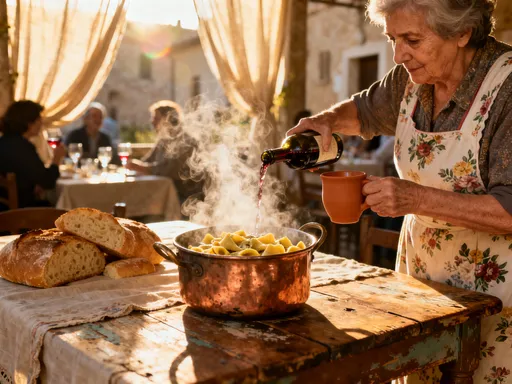
In the village of Gravedona, at the northern tip of Lake Como, a narrow stone doorway leads to Osteria del Lago Vecchio—a modest, family-run trattoria that has served the same handful of tables for over sixty years. There is no website, no Instagram page, and no English menu. What there is: a wood-fired stove, a grandmother rolling pasta by hand, and a menu that changes only with the seasons. This is not a restaurant designed for visitors. And yet, those who find it often remember it as the most memorable meal of their trip.
The specialty here is pizzoccheri, a buckwheat pasta dish originating from the Valtellina valley just west of the lake. Thick, short ribbons of pasta are boiled and layered with cabbage, potatoes, garlic, and generous amounts of melted Casera cheese, then drenched in browned butter and sage. It’s hearty, rustic, and deeply satisfying—a meal built for cold mountain evenings. What makes it extraordinary is not just the flavor, but the care behind it. Every ingredient is sourced locally: the buckwheat from nearby farms, the cheese from a small dairy in Teglio, the butter churned by hand.
The owners, now in their sixties, took over from their parents and continue the same routines: shopping at dawn markets, preparing sauces from scratch, greeting regulars by name. There’s no rush to clear tables or push dessert. Meals unfold naturally, shaped by conversation and appetite. This kind of hospitality isn’t performative—it’s habitual, woven into the rhythm of daily life. Guests are not customers; they are temporary members of the family.
Such places are increasingly rare, not because they lack quality, but because they don’t cater to mass tourism. They operate on trust, tradition, and a quiet pride in doing things the old way. For the discerning traveler, especially one seeking connection over convenience, these trattorias offer something irreplaceable: a sense of belonging, even if only for a single meal. In a world of standardized experiences, they stand as quiet guardians of authenticity.
Market Secrets: Eating Like a Local at Como’s Hidden Food Hubs
To truly understand a region’s food culture, one must visit its markets—especially in the early morning, when crates are being unpacked, bread is still warm, and the air hums with local chatter. While Como city hosts a well-known market along the lakeside, some of the most revealing food hubs are found in smaller towns like Colico, Menaggio, and Dervio. These weekly markets, often held on Thursdays or Saturdays, are where residents stock their pantries with seasonal produce, dairy, and cured meats—offering sharp-eyed visitors a chance to eat like a local.
In Colico, the market stretches along the edge of the Piazza Garibaldi, with vendors selling everything from wild asparagus to handmade sausages. One stall, run by a couple from the nearby Valchiavenna, offers fresh ricotta so delicate it trembles on the spoon. They explain that it’s made each morning from the previous evening’s milk, never refrigerated, and best eaten within hours. Nearby, a beekeeper displays jars of chestnut honey—dark, slightly bitter, and rich with forest notes—a perfect companion to aged cheeses or toasted bread.
Menaggio’s market, though smaller, is equally revealing. A woman in a floral apron sells bunches of wild herbs—rampicanti, a local green similar to wild sorrel, and finocchietto, a delicate fennel leaf used to flavor fish and soups. She offers samples with a smile, suggesting pairings and cooking tips. This is where travelers can begin to build relationships, not just transactions. A simple “buongiorno” and a willingness to listen can lead to invitations: to a nearby farm, a home kitchen, or a village feast.
Respectful interaction is key. Speaking a few phrases in Italian—“Posso assaggiare?” (May I taste?), “Dov’è prodotto?” (Where is this made?)—goes a long way. Avoid snapping photos without permission, and never haggle over prices. These vendors are not performers; they are working families. When trust is established, they may reveal hidden gems: a bakery that opens only on feast days, a winemaker who sells directly from his cellar, or a secret spot to eat with the best view of the lake at sunset.
For the traveler, the market is more than a shopping destination—it’s a classroom, a social hub, and a doorway into daily life. By participating with curiosity and courtesy, one gains not just ingredients, but insight.
Beyond Pasta: The Underrated Drinks and Desserts of Lombardy
While pasta and meat dishes dominate the spotlight, the beverages and sweets of Lombardy offer some of the region’s most distinctive pleasures—often overlooked by visitors focused on main courses. From aromatic aperitifs to rustic desserts, these elements complete the dining experience, offering balance, tradition, and a touch of indulgence.
One of the most cherished traditions is the post-dinner grappa, a clear spirit distilled from grape pomace. In Como, many families keep a bottle aged in oak or infused with local herbs. It’s served in small glasses, sipped slowly, and believed to aid digestion. Though often misunderstood as harsh, a well-made grappa is floral, warm, and surprisingly smooth. Some producers in the province also craft chinotto-based aperitifs—bitter, citrusy drinks made from the small, tart chinotto orange, served over ice with a splash of soda. These are increasingly popular at village gatherings and summer dinners.
Wine lovers will find quiet treasures in the region’s native varieties. Inferno, a bold red from the Valtellina, thrives on steep terraced vineyards and offers notes of dried cherry, licorice, and earth. Sforzato, made from dried Nebbiolo grapes, is richer still, with the depth of a Barolo but a more approachable structure. These wines are rarely exported, making them special finds at local enotecas or family cellars.
Desserts, too, reflect the region’s agricultural roots. Torta di mele al grappa, a moist apple cake infused with a splash of spirit, is a common home dessert, often baked on cool autumn afternoons. Sbrisolona, originally from neighboring Mantua, has also found a following in northern Lombardy—a crumbly, nut-based cake that shatters at the touch, best served with a glass of sweet Moscato. These sweets are not elaborate; they are humble, made with what’s available, and meant to comfort.
The best places to find them are small bakeries, agriturismi (farm-based accommodations with food service), and seasonal festivals. In late September, many villages host sagre—food festivals celebrating local products like chestnuts, honey, or wine. These events offer a rare chance to taste traditional desserts in their intended context: shared among neighbors, under strings of lights, with music in the air.
The Art of Slow Dining: How to Truly Experience Como’s Food Culture
To taste Como authentically is to slow down. In a travel culture obsessed with efficiency and photo opportunities, this can feel counterintuitive. But the essence of Lombard dining lies not in speed, variety, or presentation, but in presence. A meal here is not a task to complete, but a moment to inhabit—a space for connection, reflection, and sensory enjoyment.
This begins with mindset. Instead of rushing from sight to sight, consider building your day around a single, unhurried meal. Arrive early, accept the fixed-price menu (often called “menu del giorno”), and allow the kitchen to guide you. Don’t be surprised if service seems slow; in these kitchens, dishes are prepared one at a time, not batched for volume. The wait is not neglect—it’s care.
Learning a few Italian food phrases enhances the experience. “Un tavolo per uno, grazie” (A table for one, please), “Cosa mi consiglia?” (What do you recommend?), or “Tutto era delizioso” (Everything was delicious) can open doors and warm hearts. Even a simple “Salute!” when clinking glasses shows respect for local customs. These small gestures signal that you are not just passing through, but making an effort to engage.
Embrace the rhythm of the table. Start with a light aperitivo, move through antipasti, primi, and secondi at your own pace, and linger over espresso and grappa. Let conversation flow. Ask the owner about the dish, the season, the village. You may not speak fluent Italian, but genuine interest transcends language. In return, you may hear stories—about a recipe from a grandmother, a harvest from the hills, or a festival only locals attend.
This kind of dining is not about luxury. It’s about intimacy, continuity, and respect. It asks the traveler to pause, to listen, to savor. And in that stillness, something profound happens: the boundary between visitor and local blurs, if only for an afternoon.
Conclusion
Lake Como’s true culinary identity isn’t found in postcard-perfect piazzas, but in its quiet corners where food is lived, not staged. By stepping off the tourist circuit, travelers gain more than a meal—they inherit a moment of local life. This is dining as discovery, where every bite tells a story of land, family, and time. Let your taste guide you beyond the guidebooks.