Taste of Mysore: A Flavor-Filled Journey Through Southern India’s Hidden Gems
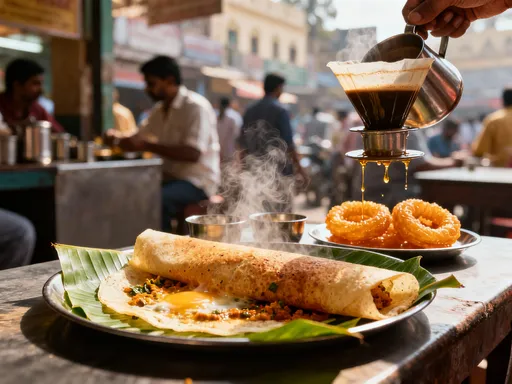
Ever wondered how food can tell the story of a city? In Mysore, every bite feels like a whispered secret from the past. From steaming dosas served on banana leaves to golden jalebis dripping with syrup, the streets hum with culinary magic. I wandered spice-scented lanes, tasted royal recipes born in palace kitchens, and discovered why this city feeds not just the body—but the soul. More than a destination, Mysore is an experience shaped by centuries of tradition, devotion, and the quiet pride of home cooks and street vendors who guard flavors passed down through generations. Here, eating is not merely sustenance; it is an act of connection—to history, to community, and to the land itself.
Arrival in Mysore: First Impressions of a City Steeped in Tradition
Stepping off the train at Mysore Junction, one is immediately embraced by a warmth that goes beyond the subtropical climate. The air carries a distinctive blend of sandalwood incense, blooming jasmine, and the earthy aroma of turmeric drying in courtyards. Rickshaws honk gently through bustling lanes, while saffron-robed priests emerge from temple doorways, their chants mingling with the rhythmic clang of brass bells. The city unfolds like a living manuscript—its pages written in carved stone, silk saris, and the daily rituals of its people.
Mysore, officially known as Mysuru, stands as a jewel in Karnataka’s cultural crown. Unlike the fast-paced energy of larger Indian metropolises, Mysore maintains a graceful balance between heritage and modernity. Once the seat of the Wodeyar dynasty, whose patronage of the arts and architecture still echoes in the grandeur of the Mysore Palace, the city exudes a regal calm. Yet, this elegance is never distant; it is woven into everyday life, from the meticulous way street vendors arrange banana leaves to the precise folds of a freshly steamed idli.
The first meal after arrival often sets the tone for the entire journey. At a modest eatery near the market, a plate arrives with quiet ceremony: a golden-brown dosa folded into a crisp cone, accompanied by small bowls of coconut chutney, tomato sambar, and a side of spiced pickle. The first bite—crisp, fragrant, layered with flavor—confirms what many travelers come to realize: Mysore’s soul is best discovered through its food. This is not a city that shouts; it whispers, invites, and feeds with intention.
The Heart of Mysore’s Cuisine: Where Tradition Meets Taste
Mysore’s culinary identity is shaped by a confluence of history, geography, and spiritual practice. As a former princely state with deep ties to temple culture and royal patronage, food in Mysore has long been more than nourishment—it is an offering, an art form, and a reflection of seasonal harmony. The cuisine draws from the broader traditions of South Indian vegetarian cooking but distinguishes itself through subtle spicing, emphasis on texture, and reverence for ingredient purity.
Central to Mysore’s flavor profile are ingredients grown in the fertile plains and hills of Karnataka. Coconut, in all its forms—fresh, grated, milk, or oil—anchors countless dishes. Tamarind lends a gentle sourness, balancing rich ghee and pungent mustard seeds. Curry leaves, toasted in hot oil, release a citrusy depth that defines the region’s tempering technique, or tadka. Rice, lentils, and seasonal vegetables form the foundation of daily meals, prepared in ways that highlight their natural qualities rather than mask them.
Meals in Mysore follow a rhythm rooted in Ayurvedic principles, aiming to balance the six tastes: sweet, sour, salty, bitter, pungent, and astringent. A typical lunch might include steamed rice, sambar (a lentil-based vegetable stew), rasam (a peppery broth), curd, and a dry vegetable preparation, each dish contributing to this equilibrium. This balance is not rigid but intuitive, adjusted according to the weather, the season, and the needs of the body.
What sets Mysore apart is the continuity of tradition. Recipes are preserved not in cookbooks but in memory—passed from grandmother to granddaughter, from temple kitchen to roadside stall. The use of stone grinders for dosa batter, the slow simmering of lentils in clay pots, and the practice of serving food on banana leaves are not nostalgic gestures but living customs. In this way, eating in Mysore becomes a dialogue with the past, a daily reaffirmation of values that prioritize mindfulness, hospitality, and respect for nature.
Breakfast Like Royalty: The Magic of Mysore Masala Dosa
No exploration of Mysore’s food culture is complete without encountering its most celebrated dish: the Mysore Masala Dosa. Unlike the versions found in other parts of India, this dosa is distinguished by its spicy green chutney layered between the crisp crepe and the spiced potato filling. The result is a symphony of textures and flavors—crunchy, soft, tangy, and fiery all at once.
The origin of the Mysore Masala Dosa is often traced to local eateries that catered to palace workers and temple staff. Over time, it evolved into a breakfast staple, enjoyed by students, laborers, and families alike. One of the most revered spots to experience it is a decades-old canteen tucked behind Devaraja Market, where lines form before sunrise. Inside, the kitchen operates like a well-oiled machine: women in cotton saris grind rice and urad dal in stone mills, while cooks spread batter with swift, practiced motions across hot griddles.
The dosa begins with fermented batter, a blend of rice and lentils left to rest overnight. This fermentation process not only gives the dosa its characteristic tang but also enhances digestibility. When poured onto the griddle, the batter spreads into a lacy, golden disc, then crisps at the edges. The cook then spreads a thick layer of spicy green chutney—made from coriander, coconut, green chilies, and cumin—before adding the potato masala. The dosa is folded with care and served immediately, often on a banana leaf, with small bowls of chutney and sambar on the side.
What makes this dish truly special is not just its taste but the ritual surrounding it. Eating a Mysore Masala Dosa at dawn, seated on a wooden bench with strangers who feel like neighbors, is an act of shared belonging. The heat of the chutney awakens the senses; the coolness of the coconut chutney soothes. Each bite carries the weight of tradition, yet feels utterly alive in the moment. It is, in every sense, breakfast elevated to an art form.
Sweet Escapes: Mysore’s Legendary Sweets and Their Stories
If the dosa represents the savory soul of Mysore, then Mysore Pak is its sweet heart. This rich, fudgy confection, made from gram flour, ghee, and sugar, was born in the royal kitchens of the Wodeyar palace. Legend has it that a palace chef created it as a tribute to a visiting dignitary, using only the finest ingredients available. Today, it remains a symbol of celebration, offered during festivals, weddings, and temple ceremonies.
Mysore Pak is more than a dessert—it is an experience of texture and temperature. When freshly made, it is warm, crumbly, and luxuriously rich, with ghee pooling at the edges. The gram flour gives it a nutty depth, while the sugar provides a slow, lingering sweetness. The best versions are made in small batches, using pure cow’s ghee and slow-cooked to perfection. A single bite dissolves into a memory of comfort and indulgence.
One of the oldest sweet shops in the city, established over a century ago, still prepares Mysore Pak using traditional methods. The owner, a third-generation confectioner, speaks proudly of his family’s recipe, unchanged since the 1920s. During Dasara, the city’s grand 10-day festival, the shop sees lines stretching around the block. Locals come not just to buy sweets but to participate in a tradition—gifting Mysore Pak to friends, family, and neighbors as a gesture of goodwill.
But Mysore’s sweet repertoire extends beyond Pak. Obbattu, also known as Holige, is a flat, stuffed sweet bread filled with a mixture of lentils, jaggery, and cardamom. Jalebis, deep-fried in spiral shapes and soaked in saffron-infused syrup, are served warm during morning walks. Even temple prasadam—food offered to deities—often includes simple sweets like rice laddoos or coconut burfi, distributed freely to devotees.
What unites these treats is their role in daily life. Sweets in Mysore are not reserved for special occasions alone; they are woven into the fabric of community. A neighbor might bring a small packet of Mysore Pak as a housewarming gift. A child might receive a jalebi as a treat after school. In this way, sweetness becomes a language of care, a way of saying “you are remembered.”
Off the Beaten Path: Hidden Eateries Only Locals Know
Beyond the well-known restaurants and palace-area cafes lie the true treasures of Mysore’s food scene: unmarked stalls, temple-side canteens, and family-run kitchens that operate without signage or online presence. These are places discovered not through apps but through conversation—through asking a rickshaw driver where he eats, or following the scent of frying spices down a narrow alley.
One such spot, tucked behind a small Vishnu temple, serves Neer Dosa—a delicate, lacy crepe made from rice batter so thin it resembles lace. Unlike the fermented dosa, Neer Dosa is made from raw rice soaked and ground with coconut, resulting in a soft, almost translucent texture. It is best enjoyed with a mild coconut chutney or a simple vegetable stew. The vendor, an elderly woman who has cooked here for over 40 years, greets regulars by name and adjusts the thickness of the dosa based on their preference.
Another hidden gem is a roadside stall known for Maddur Vada—crispy, spiced fritters made from rice flour, onions, and curry leaves. Named after the town of Maddur, these vadas have gained a cult following among train travelers and locals alike. Served hot with chutney, they are the perfect companion to a cup of strong filter coffee. The stall operates only in the early morning and late afternoon, closing when the batter runs out—a testament to its popularity.
One of the most memorable experiences was an impromptu invitation to a home meal. After striking up a conversation with a woman selling banana leaves at the market, I was welcomed into her modest home for lunch. The meal was simple: steamed rice, sambar, a dry okra fry, and buttermilk spiced with cumin and curry leaves. What made it extraordinary was the warmth of the welcome and the care with which each dish was prepared. The family ate together on the floor, sharing stories between bites. In that moment, food was not just sustenance—it was kinship.
These offbeat experiences reveal a truth about Mysore: its greatest flavors are often found where tourism ends and daily life begins. There is no menu, no pricing, and no performance—only authenticity. To eat in these spaces is to be seen, to be included, to be treated not as a visitor but as a guest.
Beyond the Plate: Food as Culture in Mysore
In Mysore, food is inseparable from culture. It is present in the rhythm of festivals, the rituals of worship, and the quiet moments of family life. During Dasara, the city’s most famous celebration, food takes center stage. Elaborate vegetarian feasts are prepared in temple courtyards and distributed to thousands. The preparation itself is a sacred act, with cooks observing purity rituals and offering the first portions to the deities.
Temple food, or prasadam, is more than a religious offering—it is a symbol of divine grace. Whether it is a simple rice ball or a plate of sweet pongal, prasadam is believed to carry blessings. Devotees line up daily at temples like Chamundeshwari and Sri Chamarajeshwara to receive it. The act of sharing prasadam—offering it to others, accepting it with folded hands—reinforces community bonds and humility.
Street food, too, functions as social glue. Morning markets buzz with activity as office workers, students, and homemakers gather at stalls for breakfast. The exchange is brief but meaningful: a smile, a shared comment on the weather, a recommendation for today’s special. These small interactions build a sense of belonging, turning the city into a network of familiar faces and trusted flavors.
Even the way food is served carries meaning. The use of banana leaves is not merely traditional; it reflects a philosophy of sustainability and mindfulness. The leaf is biodegradable, adds a subtle aroma to the food, and is arranged with care—rice in the center, dishes placed in a specific order. Eating with hands, as is customary, encourages a tactile connection to the meal, fostering awareness and gratitude.
In this way, Mysore teaches a deeper lesson: that food is not just what we consume, but how we live. It reflects values of generosity, balance, and respect—for people, for nature, for the unseen threads that connect one meal to the next, one generation to the next.
Practical Tips for the Food-Loving Traveler
For those planning to explore Mysore’s culinary landscape, a few practical considerations can enhance both enjoyment and safety. The best time to visit local eateries is during peak hours—early morning for breakfast, noon for lunch—when turnover is high and food is freshly prepared. Look for places with long queues of locals; this is often the best indicator of quality and hygiene.
While Mysore is generally safe for travelers, it is wise to choose establishments where food is cooked to order and served hot. Avoid pre-cut fruits or unsealed drinks, and opt for bottled or filtered water. Many restaurants now display hygiene ratings, and some popular spots have embraced digital menus and contactless service without losing their authenticity.
Vegetarian travelers will find Mysore exceptionally welcoming. The majority of traditional cuisine is lacto-vegetarian, with no onion or garlic in temple food and many home-cooked meals. Even street vendors often separate vegetarian and non-vegetarian items, and many dishes are naturally vegan or can be adapted upon request.
Seasonality plays a role in what’s available. Mangoes peak in summer, jackfruit in monsoon, and pumpkins in winter. Festivals like Ugadi and Diwali bring special sweets and dishes that may not be available year-round. Asking locals what’s in season or what they’re cooking at home can lead to unforgettable discoveries.
When dining, a few etiquette gestures go a long way. Washing hands before and after meals is customary. Eating with the right hand is traditional, and finishing what’s on the banana leaf is seen as a sign of appreciation. A simple “Nandi” (thank you in Kannada) or a nod of gratitude is often enough to express respect.
For those seeking guided experiences, several local initiatives offer food walks led by residents who share not just dishes but stories. These tours often include visits to markets, spice grinders, and home kitchens, providing a holistic view of Mysore’s food culture. They are especially valuable for travelers who want to go beyond the surface and connect with the people behind the meals.
Conclusion: Why Mysore Stays With You Long After the Last Bite
Mysore does not reveal itself all at once. Its beauty is not in grand monuments alone, nor in the glitter of its festivals, but in the quiet moments: the steam rising from a dosa, the sound of a mortar grinding spices, the smile of a vendor who remembers your order. It is a city that feeds the senses and the spirit in equal measure.
To taste Mysore is to remember it. The flavors linger not just on the tongue but in the heart. They evoke the warmth of human connection, the dignity of tradition, and the joy of simple pleasures. In a world that often moves too fast, Mysore invites us to slow down, to savor, to be present.
This is the power of food as culture. It opens doors that sightseeing alone cannot. It transforms a journey from a series of destinations into a story—one written in spice, sweetness, and shared humanity. So when you come to Mysore, come hungry. Not just for meals, but for meaning. Let the city feed you in every way it knows how. And when you leave, you will carry a piece of it with you—not just in memory, but in the way you think about food, community, and home.