Why Balance Training Actually Works—And How It Changed My Daily Moves
You don’t realize how much you rely on balance until it starts slipping—reaching for something, stepping off a curb, or just turning quickly. I used to wobble more than I’d admit, until I started paying attention. Turns out, balance isn’t just for athletes or older adults; it’s a core part of how your body moves every day. The good news? Simple, consistent movement can make a real difference. This is how I discovered the quiet power of balance training—and why it might be the most underrated part of your fitness routine.
The Hidden Struggle: Why Poor Balance Sneaks Up on You
Balancing is more than standing still without swaying—it is a dynamic skill that involves constant micro-adjustments throughout the day. Most people think of balance only when they trip or feel unsteady, but subtle declines begin long before noticeable stumbles occur. Modern lifestyles contribute significantly to this gradual weakening. Hours spent sitting reduce the variety of movements our bodies are designed to perform, leading to underused muscles and diminished neural coordination. Walking on flat surfaces, avoiding stairs, and relying on handrails all reduce opportunities for natural balance challenges, causing the system to become less responsive over time.
Common signs of declining balance are often dismissed as normal parts of aging or simple clumsiness. These include frequently bumping into furniture, needing to hold onto walls while moving through the house, or feeling shaky when standing on one leg to put on pants. Some may notice they rely heavily on visual cues—like always watching their feet while walking—or feel uneasy on uneven ground such as gravel or grass. These are not minor quirks; they signal that the body’s balance mechanisms are not functioning optimally.
When balance weakens, the risk of falls and related injuries increases, especially as muscle strength and joint stability decline. Even small missteps can lead to sprains, fractures, or longer recovery periods, particularly in middle age and beyond. Reduced mobility follows, often leading to decreased activity levels, which in turn accelerates physical decline. The cycle becomes self-reinforcing: less movement leads to poorer balance, which leads to fear of moving, resulting in even less activity. Recognizing these early signs allows individuals to take proactive steps before limitations become more serious.
What Science Says: The Body’s Balance System Demystified
Balanced movement relies on three interconnected systems: the vestibular system in the inner ear, proprioception from sensory receptors in muscles and joints, and visual input from the eyes. The vestibular system detects head motion and spatial orientation, helping the brain understand whether you are moving up, down, or turning. Proprioception, often called “body awareness,” allows you to sense where your limbs are without looking—such as knowing your foot is lifted even with your eyes closed. Vision provides real-time feedback about your surroundings, helping you adjust your posture and step placement accordingly.
These systems work together seamlessly in healthy individuals. For example, when walking on a slightly uneven sidewalk, your eyes detect the change in surface, your inner ear senses shifts in head position, and your muscles and joints send signals about foot pressure and leg angle. Your brain integrates all this information within milliseconds and adjusts your posture automatically. However, if one system is impaired—such as blurred vision or inner ear disturbances—your body must compensate, often leading to increased sway or instability.
Research shows that balance is not a fixed trait but a trainable function. Studies published in journals like the Journal of Gerontology and Medicine & Science in Sports & Exercise demonstrate that targeted balance exercises improve neural communication between the brain and muscles. Over time, this enhances reaction speed, coordination, and postural control. Importantly, these improvements are possible at any age. Adults in their 40s, 50s, and beyond can see measurable gains in stability and confidence through regular practice. The nervous system remains adaptable, a quality known as neuroplasticity, meaning the body can continue to learn and refine motor skills throughout life.
One notable finding from clinical trials is that older adults who engage in balance training reduce their fall risk by up to 30%. This is not due to increased strength alone but to improved integration between sensory systems and faster muscle response times. Even younger individuals benefit, especially those with sedentary routines. By stimulating all three balance systems, training helps maintain functional independence and prevents the slow erosion of movement confidence that often goes unnoticed until it’s significantly diminished.
Why Exercise Beats Passive Fixes—The Active Edge
Many people respond to balance concerns by avoiding situations where they might feel unsteady—skipping curbs, always using handrails, or limiting walks to smooth pavement. While these strategies may feel safe in the short term, they do not address the root cause. Avoidance weakens the very systems needed for stability, much like wearing a cast on an uninjured limb would lead to muscle atrophy. True improvement comes from active engagement, not passive protection. Movement stimulates the nervous system, strengthens stabilizing muscles, and enhances coordination through repetition and adaptation.
Balance training works because it challenges the body in controlled ways, prompting neural pathways to become more efficient. When you stand on one leg, for instance, your brain receives feedback from your foot, ankle, and hip muscles, recalibrating how it controls posture. Each small correction strengthens the connection between sensation and action. This process is similar to learning to ride a bike: you don’t gain skill by watching others—you learn by doing, falling, adjusting, and trying again. The body remembers successful patterns and gradually makes them automatic.
Active training also engages deep postural muscles that are rarely used during everyday sitting or walking. These include the transverse abdominis, multifidus, and gluteus medius—small but crucial muscles that support spinal alignment and pelvic stability. Strengthening them improves not only balance but also posture, reducing strain on the lower back and joints. Over time, this leads to smoother, more confident movement during routine tasks like bending, lifting, or reaching overhead.
Beyond physical gains, active balance practice builds mental resilience. As individuals gain control over their movements, they develop greater confidence in their bodies. This reduces anxiety about falling or losing stability, which in turn encourages more physical activity. The result is a positive feedback loop: better balance leads to more movement, which further improves balance. Unlike passive fixes that create dependency, active training empowers individuals to move with greater independence and assurance.
The Most Effective Movements: Exercises That Deliver Real Results
Effective balance training does not require special equipment or hours of effort. A few key exercises, performed consistently, can produce noticeable improvements in as little as a few weeks. These movements are supported by research and designed to target the vestibular, proprioceptive, and visual systems simultaneously. They can be done at home, require minimal space, and are adaptable to different fitness levels.
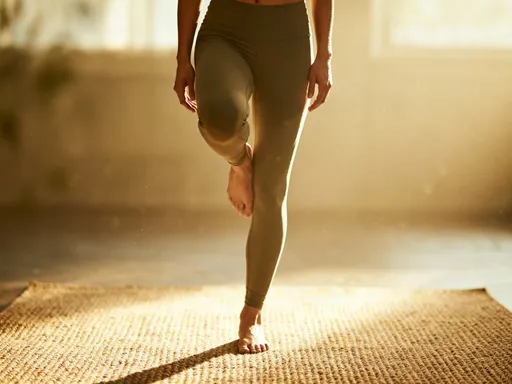
One foundational exercise is the single-leg stand. Stand near a sturdy chair or wall for support if needed. Lift one foot off the ground and balance on the other leg for 20 to 30 seconds. Focus on keeping your hips level and your standing knee slightly bent, not locked. Repeat on the other side. Perform two to three sets on each leg, once or twice daily. This exercise strengthens the ankle stabilizers and improves proprioception. Over time, aim to reduce reliance on hand support and increase hold time up to one minute.
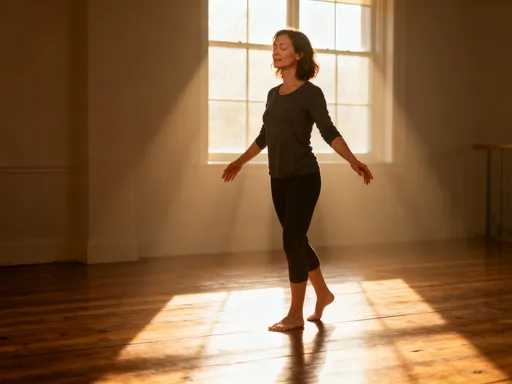
The heel-to-toe walk is another effective movement. Walk in a straight line, placing the heel of one foot directly in front of the toes of the other, as if walking on a tightrope. Take 10 to 20 steps, keeping your arms out to the sides for balance. This challenges coordination and engages core muscles. It also integrates visual tracking, as you focus on a point ahead to maintain direction. Perform this two to three times in a row, ideally once a day. It mimics real-world demands like walking on narrow paths or crowded sidewalks.
Weight shifts are simple but powerful. Stand with feet shoulder-width apart and slowly shift your weight to one side, lifting the opposite heel off the floor. Hold for a few seconds, then shift to the other side. Repeat 10 to 15 times per side. This movement enhances lateral stability and strengthens the hips and glutes, which play a key role in preventing side-to-side sway. It also trains the body to adjust its center of gravity smoothly.
Mini squats on an unstable surface add an extra challenge. Stand on a folded towel, foam mat, or balance pad and perform small, controlled squats—only lowering a few inches. Keep your chest up and knees aligned over your toes. Do 10 to 12 repetitions. The unstable surface increases demand on the proprioceptive system, forcing muscles to make constant micro-adjustments. This builds resilience for real-life situations like stepping off a curb or walking on uneven ground.
Common mistakes include holding the breath, locking the knees, or looking down at the feet. To correct these, focus on steady breathing, maintain a slight bend in the joints, and keep your gaze forward. Progress gradually—consistency matters more than intensity. Even two minutes a day can lead to meaningful improvements over time.
Making It Stick: How to Build Balance Into Everyday Life
One of the biggest challenges with any fitness habit is consistency. The key to long-term success with balance training is integration—finding natural moments in the day to practice without needing extra time or equipment. Small, repeated actions accumulate into lasting change. The goal is not to add another task to your schedule but to transform routine moments into opportunities for improvement.
Simple habits can make a difference. Try brushing your teeth while standing on one leg. This turns a two-minute activity into a balance workout. When waiting for the kettle to boil or the microwave to finish, stand with feet together and gently rock side to side or front to back. While watching TV, pause during commercials to perform a few single-leg stands or heel-to-toe steps across the living room. These micro-practices add up without disrupting your day.
Another strategy is to create a “balance minute” each hour. Set a gentle reminder on your phone or watch to pause and stand with good posture, engage your core, and shift your weight slowly from foot to foot. This brief reset improves body awareness and interrupts prolonged sitting. Over time, these moments train your nervous system to maintain better alignment even when you’re not actively practicing.
Walking mindfully is another powerful tool. Instead of staring at your phone or the ground, lift your gaze and walk with intention. Feel your feet making contact with the floor and notice how your weight transfers from heel to toe. Try walking on different surfaces—grass, sand, or a sidewalk with slight texture—to give your balance system varied input. These subtle changes stimulate adaptation and keep your body responsive.
Tracking progress can be motivating, but it doesn’t require complex measurements. Simply time how long you can stand on one leg without support. Record it once a week. Most people see improvements within three to four weeks. Celebrate small wins—holding steady for 10 seconds longer, needing less support, or feeling more confident on stairs. These quiet victories build momentum and reinforce the value of continued effort.
Beyond Stability: The Ripple Effects of Better Balance
The benefits of balance training extend far beyond preventing falls. Improved balance enhances overall body awareness, leading to better posture, smoother movements, and reduced joint strain. As coordination improves, daily tasks become easier and more efficient. Carrying groceries, bending to pick up items, or playing with children all require dynamic stability—skills that are directly strengthened through balance practice.
Many people report feeling more focused and present after starting balance exercises. This is not coincidental. The act of balancing demands attention and mindfulness. When you stand on one leg, you must tune into your body’s signals, quiet distractions, and stay in the moment. This mental engagement strengthens the mind-body connection, which can translate into greater concentration in other areas of life.
Joint protection is another important benefit. Better balance means fewer sudden shifts in weight or awkward landings, which reduces stress on knees, hips, and ankles. Over time, this can help prevent wear and tear that contributes to conditions like osteoarthritis. Stronger stabilizing muscles also support proper joint alignment, reducing the risk of overuse injuries.
Confidence is perhaps the most meaningful outcome. One woman in her early 50s shared that she used to dread stepping off curbs or walking on icy sidewalks, always fearing a misstep. After six weeks of daily balance practice, she noticed she no longer tensed up in those situations. She walks with more ease, carries bags without worry, and feels more in control of her body. This shift is not about athletic performance—it’s about reclaiming independence and moving through the world with less fear and more freedom.
Staying Safe and Smart: When to Seek Guidance
Balance training is safe and beneficial for most people, but it’s important to listen to your body. If you experience dizziness, pain, or severe instability during exercises, stop and consult a healthcare professional. These symptoms may indicate underlying conditions that require evaluation, such as inner ear issues, neurological concerns, or musculoskeletal problems. A physical therapist can provide personalized guidance and ensure your routine is appropriate for your current abilities.
Beginners should start slowly and use support as needed. Hold onto a chair, counter, or wall during exercises until stability improves. Focus on form rather than duration or difficulty. It’s better to perform a single-leg stand with control for 15 seconds than to struggle for 30 seconds with poor alignment. Progress at your own pace—small, consistent efforts yield lasting results.
Remember that balance training complements, but does not replace, medical care. If you are recovering from an injury, managing a chronic condition, or taking medications that affect coordination, discuss your plans with your doctor. They can help you determine the safest way to incorporate movement into your routine.
Progress is personal. Some people see changes in days; others take weeks. What matters is showing up consistently and honoring your body’s needs. Perfection is not the goal—engagement is. Every time you stand a little steadier or move with more control, you are building a foundation for lifelong mobility and independence.
Balanced movement is not a fitness afterthought—it is a daily essential, as fundamental as breathing or posture. It supports how we move, carry ourselves, and interact with the world. The changes that come from balance training are quiet but profound: easier steps, steadier turns, and a deeper sense of bodily confidence. These improvements do not happen overnight, but through simple, repeatable actions done with intention. Viewing balance as a lifelong skill—one worth nurturing—shifts the focus from fear of falling to empowerment through movement. Better balance is not about perfection. It is about moving through life with more ease, control, and confidence, one steady step at a time.